Energy in Industrial Parks: A Practical Guide and Key Models of Energy Supply
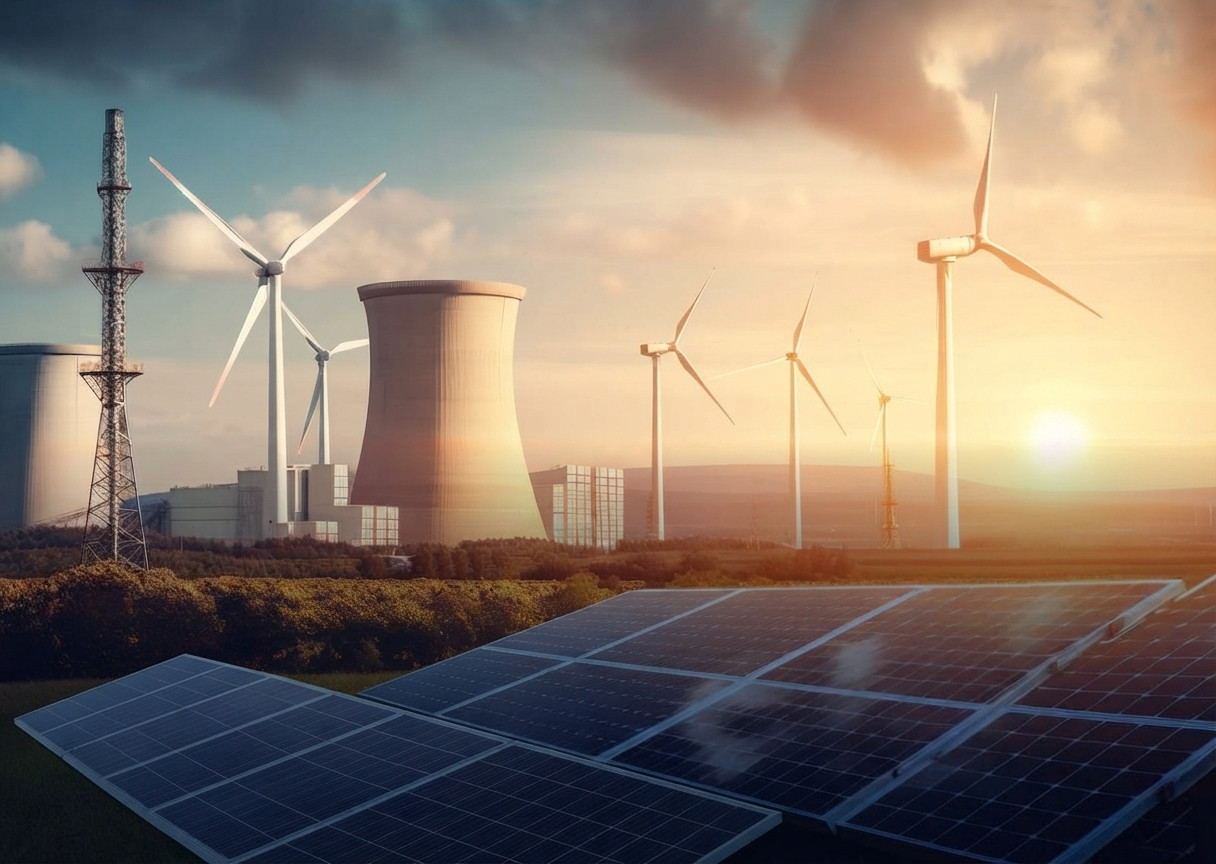
Ukrainian legislation allows participants of industrial parks (IP) to carry out activities in the sphere of renewable energy and energy storage. According to clarifications from the Ministry of Energy of Ukraine and NEURC (National Energy and Utilities Regulatory Commission), the generation of electricity from alternative energy sources is permitted within the territory of industrial parks to cover internal demand and enhance energy independence.
The Ministry of Economy and Environment of Ukraine, alongside energy regulators, has structured practical recommendations for creators, developers, and management companies of industrial parks.
Four Key Models of Energy Supply for Industrial Parks
When planning an industrial park's energy infrastructure, business entities can choose from four main directions:
- Own Generation: Power generation strictly for covering self-consumption.
- Active Consumer: Covering self-consumption with the option to sell surplus electricity back to the grid.
- Power Producer: Systematic generation and commercial sale of electricity on the market.
- Energy Storage Systems (ESS): Utilizing energy storage technologies for balancing and power reliability.
Self-Generation and the "Active Consumer" Status
- Generation for Self-Consumption: A consumer has the right to install generating facilities without obtaining a generation license, provided that the electricity generated is not fed into the Integrated Power System (IPS) of Ukraine or grids of other entities at any time.
- Active Consumer Model: Enables the sale of excess electricity under self-generation mechanisms. Connecting a generating unit within a consumer’s internal network requires no separate connection service fee, and Distribution System Operators (DSOs) carry out free technical inspections within 5 business days.
- Key Limitation: Active consumer status does not grant the right to sell electricity directly to other consumers (e.g., a management company cannot resell this energy to park tenants). Other mechanisms provided by the Law must be considered for such cases.
Licensing Requirements
Licensing applies under the following conditions:
- Power Generation: Required if capacity at a single site exceeds 5 MW, or total capacity across all sites exceeds 20 MW.
- Energy Storage (ESS): Required if storage capacity at a single site exceeds 5 MW.
- Electricity Supply: Can only be carried out by licensed electricity suppliers.
Grid Connection and Capacity Planning
- Phased Capacity Commissioning: While there is no separate capacity reservation mechanism dedicated solely to IPs, applicants can specify prospective capacity needs by staging development in phases when applying for connection (with a maximum total commissioning period of up to 3 years).
- Temporary Connections: Simplified connection conditions apply during martial law. However, within 6 months after the end of martial law, temporary connections must be brought into full compliance with the Distribution Code.
- Grid Development Plans: While no special discounted tariffs exist for IPs (tariffs must be non-discriminatory and equal), DSOs are required to account for the prospective needs of industrial parks in their 5-year network development plans.
Uninterrupted Power Supply and Blackout Protection
Legislation incorporates incentives to expand distributed generation and internal capacity:
- 60% Threshold: Forced power restrictions do not apply to non-household consumers if at least 60% of their consumption in every settlement hour is covered by their own generation.
- 80% Threshold: Hourly outage schedules do not apply to a distribution line if distributed generation covers at least 80% of the consumption of all consumers connected to that line during its operating hours.
Key Takeaways for Industrial Park Energy Design
Parameter / Regulation | Value |
Self-generation threshold (No forced restrictions) | Covers $\ge 60\%$ of own consumption |
Grid line protection (No outage schedules) | Covers $\ge 80\%$ of line consumption |
Licensing threshold (Generation / Storage) | $>5\text{ MW}$ per site ($>20\text{ MW}$ total generation) |
Max period for phased capacity introduction | Up to 3 years |
Post-war adjustment for temporary connections | 6 months after martial law |
Conclusion: There is no single universal energy model for all industrial parks. NEURC and the Ministry of Energy allow each business entity to choose the most suitable model—whether self-generation, active consumer, or power producer—based on specific project conditions and economic feasibility.